
Challenge
Starting point: a clean space with high precision demands
Operating rooms require technical reliability, visual precision and long-term confidence in the room.
AGEL operating-room case study: clean spaces, reflection control, procedure-specific scenes and a replacement solution better aligned with the way the team works.
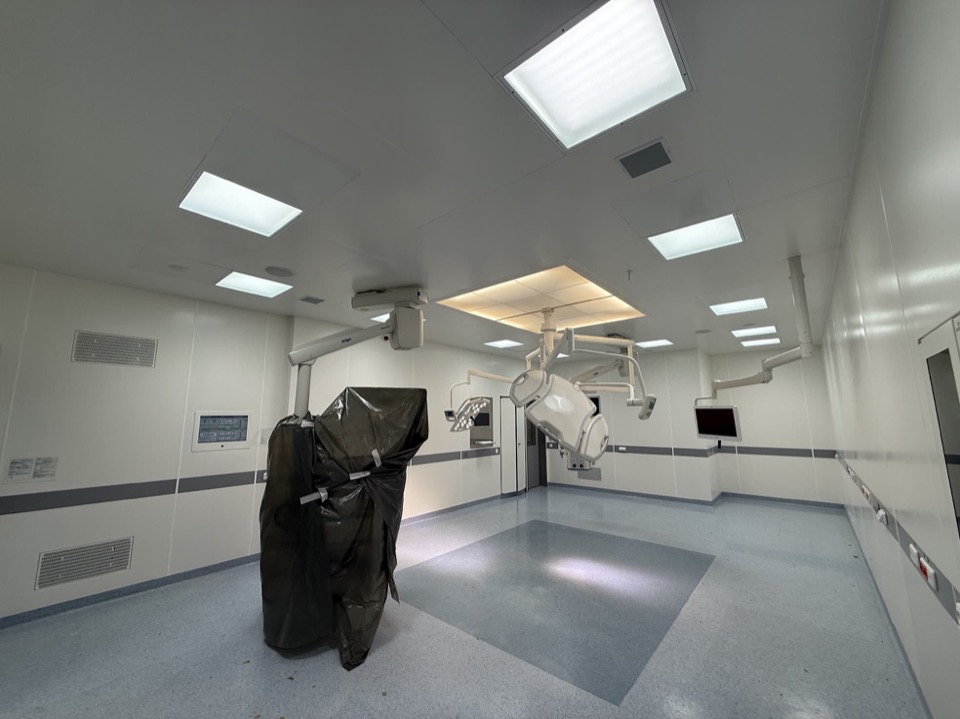
Four AGEL operating rooms show that healthcare lighting is not about catalogue names, but precision, reflection control and correctly designed scenes.
Operating rooms require technical reliability, visual precision and long-term confidence in the room.
A solution that looks similar in a catalogue does not always work in daily use. During the project, the original delivered setup proved less suitable for the real...
The space feels calmer, cleaner and easier to read. The lighting no longer disturbs with unnecessary reflections and provides meaningful operating modes.
In healthcare, light has to do more than meet a basic parameter. In an operating room it becomes part of precise work, team orientation and confidence in the environment.
The AGEL project showed why a design-led approach matters. The final system better matched clean-space requirements, reduced disruptive reflections and gave the team useful scenes for different procedures.
Operating rooms require technical reliability, visual precision and long-term confidence in the room.
The design therefore had to address intensity, reflections, calm integration into the ceiling and modes for different procedures.
A solution that looks similar in a catalogue does not always work in daily use. During the project, the original delivered setup proved less suitable for the real operating-room requirements.
This is where a design-led approach matters more than a simple luminaire replacement.
The final solution uses a lighting system for clean spaces with stable output and precise visual conditions.
Special glass helps limit reflections, while scene control allows the room to adapt to the actual work of the medical team.
The space feels calmer, cleaner and easier to read. The lighting no longer disturbs with unnecessary reflections and provides meaningful operating modes.
The main value is not only new luminaires, but light that fits the space and the team.
AGEL is a strong proof point for precise, responsible lighting in sensitive healthcare spaces.
For clinics and clean spaces, good lighting must be technically defensible, understandable in operation and designed for everyday use.
The AGEL project shows that healthcare lighting proves its quality only when it fits the space and the team in daily operation.