
Intensity
Stronger light for the active part of the day, lower intensity for evening calm.
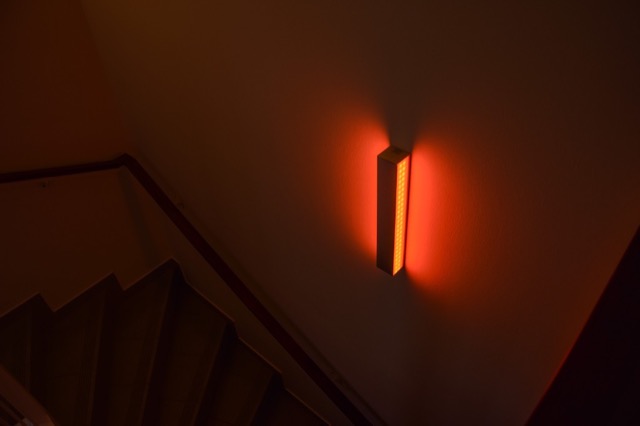
A controlled lighting regime that changes intensity, colour temperature and spectral character during the day, from active daytime scenes to calmer evening and night settings.
Biodynamics is not one static light, but a system that changes during the day. It adapts intensity and light character to whether the space needs activity, orientation, transition or calm.
Stronger light for the active part of the day, lower intensity for evening calm.
From cooler daytime light to soft, warm evening tones.
The right spectrum for daytime alertness and a calmer night regime.
Automatic scene changes by time, occupancy and space use.
The core of biodynamics is not one value, but a well-designed transition between modes according to the part of the day, operation and how light enters the space.
For morning and the active part of the day. Diffuse light from above creates a clear, even layer for focus and visual performance.
Suitable for: Morning and active daytime operation
Diffuse from above - higher intensity
For late afternoon and early evening. Light intensity gradually lowers and the spectrum changes smoothly without disruptive jumps.
Suitable for: Late afternoon and early evening
Smooth reduction - no jumps
For evening, night and quiet operation. Light should be lower, warmer and less stimulating, with only orientation light at night.
Suitable for: Evening, night and calm operation
Eye level or low layer - lower intensity
BRIGHT LIGHT VS BIODYNAMICS
Bright Light forms the active daytime part of a biodynamic system, helping create clearer visual conditions where stronger daytime light is needed.
Bright Light is the daytime layer of the whole biodynamic system.
Daytime layer
For the active part of the day. Provides stronger light for focus, orientation and visual accuracy.
24-hour light logic
A wider 24-hour regime with day, transition and calm scenes.
Standard static lighting does not react to changing space functions and user needs during the day. One setting for morning, afternoon and evening is a compromise.
A fixed setting ignores how light needs change during the day.
What suits work and activity does not suit evening calm and orientation.
Sensitive evening hours often remain too bright and make the space harder to calm down.
Biodynamics is strongest where one space serves different needs during the day and the light should respond naturally.
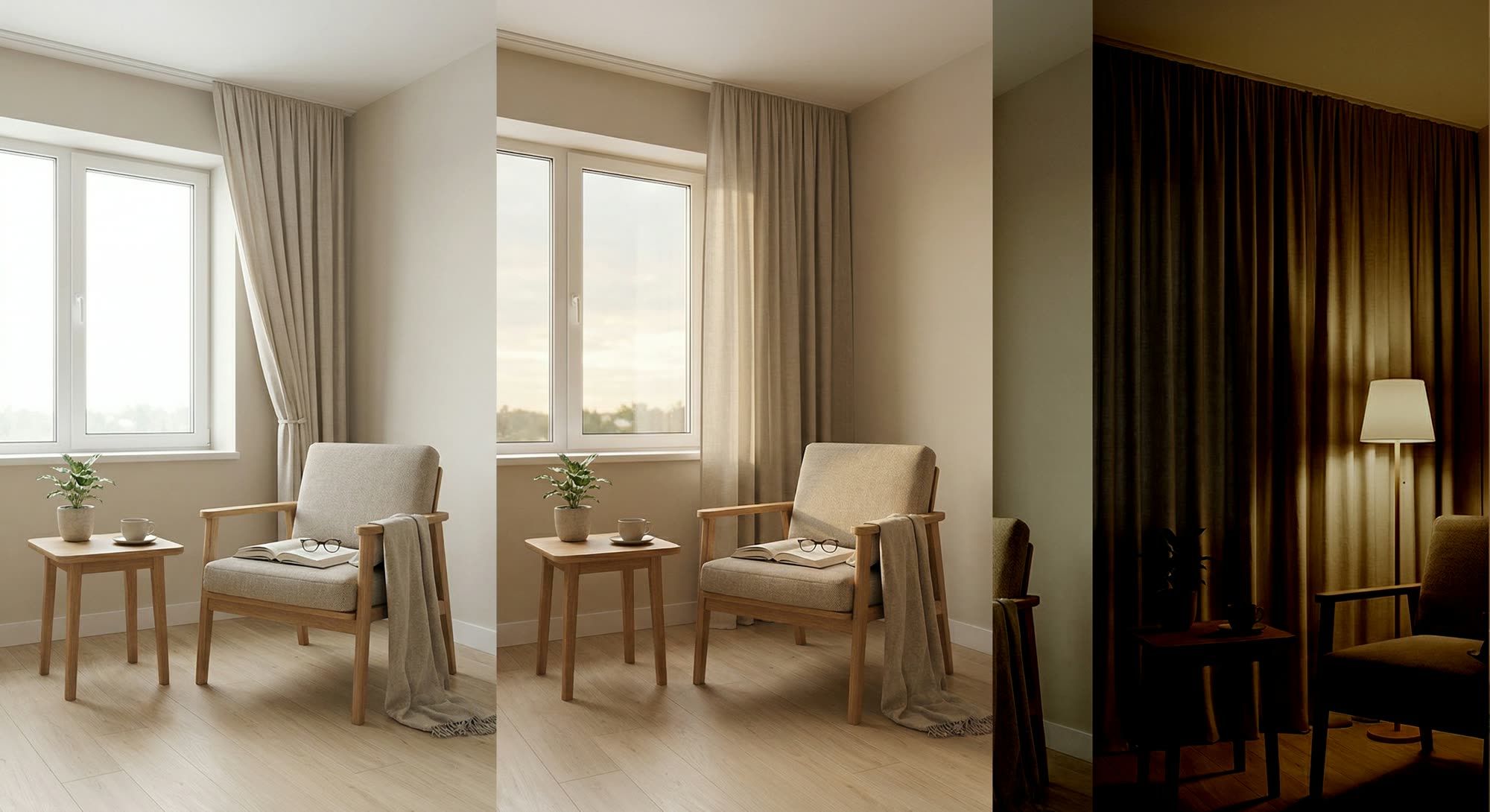
ONE SPACE, MANY MODES
One space can move between active, transition, evening and night modes. During the day it needs clearer diffuse light for activity and orientation; later the lighting layer becomes calmer and evening or night scenes take over. That is why biodynamic design makes sense in residential interiors, rooms with longer stays and healthcare or care environments.
Daytime function, evening calm and long-term comfort without one compromise setting for the whole day.
More precise work with day and calm modes in environments where orientation and care matter.
Better continuity between light, daily routines, movement, orientation and evening calming.
A regime that respects activation, orientation and rest within one space.
Lower intensity, softer light character and scenes tied to sensitive parts of the day.
Biodynamics only makes sense with control. Light changes by time, space and use, so we work with dimming, scenes, chromaticity changes and automation.
Day, transition and calm scenes can follow a concrete operating schedule.
Intensity changes without jumps and without disruptive switching.
The light character changes together with intensity to match the part of the day.
Different rooms, corridors or shared zones can run different modes in one building.
The system can run automatically while still allowing simple manual intervention.
The regime can react to presence and daylight for a more natural and efficient space.
This Lumbio product range combines warm evening modes, gentle orientation light and measured parameters. It is designed for homes and partners who want to select lighting for a specific time of day.
Bright Light is primarily a daytime performance layer. Biodynamic lighting is a wider 24-hour regime including day, transition and calm scenes.
Yes. It makes sense wherever activity, orientation and calm needs change during the day.
No. The important part is the combination of intensity, chromaticity, spectrum and scene control over time.
Yes. It can include scene control, dimming, chromaticity change, zoning and links to other systems by project.
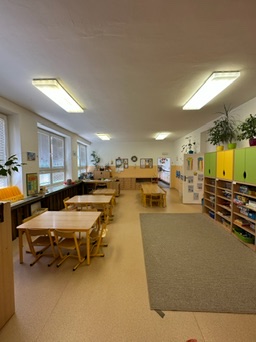
We will prepare a biodynamic solution according to the type of operation, usage regime and required level of control.