
Challenge
People complain about fatigue, not “bad lighting”
Typical signals are tired eyes, lower concentration, unpleasant glare or a space that feels heavy during the day.
Not every light that turns on works well in operation. Here are five situations where a lighting audit or new design makes sense.
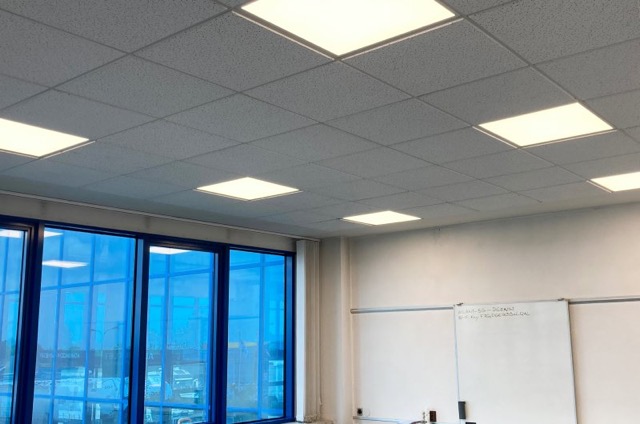
Five signals that show it is time to consider an audit, redesign or lighting modernisation.
Typical signals are tired eyes, lower concentration, unpleasant glare or a space that feels heavy during the day.
One part can be too bright while another remains underlit. One setting then tries to serve everything and works well nowhere.
If the system runs for long hours, consumes a lot and still does not deliver comfort, modernisation should be considered.
At first glance everything can look fine: the lights are on, the space is usable and nobody formally complains.
Yet lighting can quietly reduce focus, orientation, operational reliability and cost control. A few practical signals usually show that the space needs an audit or a new design.
Typical signals are tired eyes, lower concentration, unpleasant glare or a space that feels heavy during the day.
One part can be too bright while another remains underlit. One setting then tries to serve everything and works well nowhere.
If the system runs for long hours, consumes a lot and still does not deliver comfort, modernisation should be considered.
One static setting is rarely enough for work, teaching, cleaning, evening operation and service.
The biggest mistake is deciding by sight alone. Measurement and assessment help identify what should change and what can stay.
A good solution usually starts with understanding the space, not buying luminaires. The first step is often an audit, survey or technical assessment.
If you are unsure where the problem starts, that is exactly what a lighting audit is for.